
Why Dental X-Rays Matter (and Are Safe)
Last reviewed
Understand how modern, low-dose dental X-rays protect your oral health while keeping radiation exposure safely minimal.
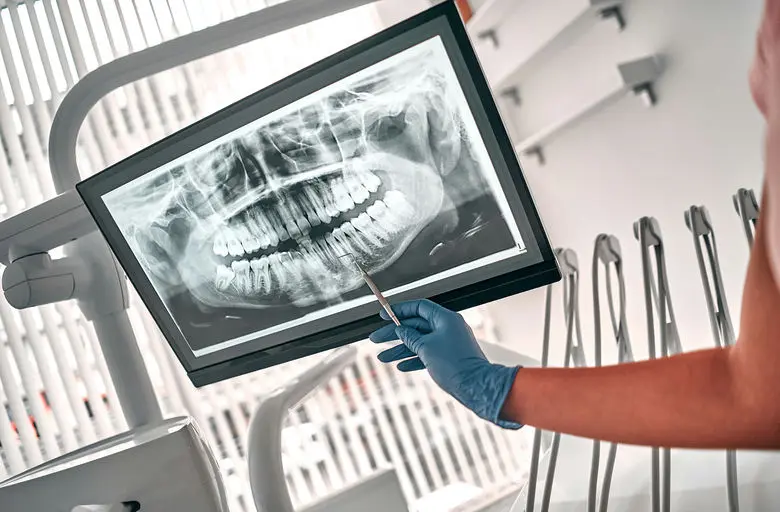
Dental X-rays let your dentist see what a visual exam can't — decay between teeth, problems under the gums, and the health of the bone. Modern digital X-rays use very low doses of radiation, which makes them a safe, routine part of care. Here's what they show and why they're safe.
What dental X-rays show
Cavities you can't see
X-rays reveal decay between teeth or under existing fillings, before it's visible or painful.
Bone and gum health
They show the jawbone, helping diagnose gum (periodontal) disease and bone loss early.
Tooth development
For children and teens, X-rays track erupting permanent teeth and help plan braces.
Planning treatment
For implants, root canals, and extractions, X-rays show the structure of teeth and bone so treatment can be planned accurately.
Impacted teeth, trauma, and infection
They locate impacted wisdom teeth and reveal the extent of an injury or infection.
Are dental X-rays safe?
Yes. The radiation dose from a dental X-ray is very low — a set of routine bitewings is comparable to a day or two of natural background radiation, and digital sensors cut the dose further compared with older film. A lead apron or thyroid collar may be used, and your dentist only takes X-rays when there's a clear reason. For pregnant patients, routine X-rays are usually deferred and taken only if necessary, with shielding.
How often are they needed?
There's no fixed schedule — your dentist decides based on your age, risk of decay, and dental history, using the lowest dose needed.
Due for a check-up? Book a check-up and cleaning and your dentist will advise whether X-rays are needed.