
Dental Fillings: Types and What to Expect
Last reviewed
Discover the different types of dental fillings and what happens during a simple, comfortable treatment visit
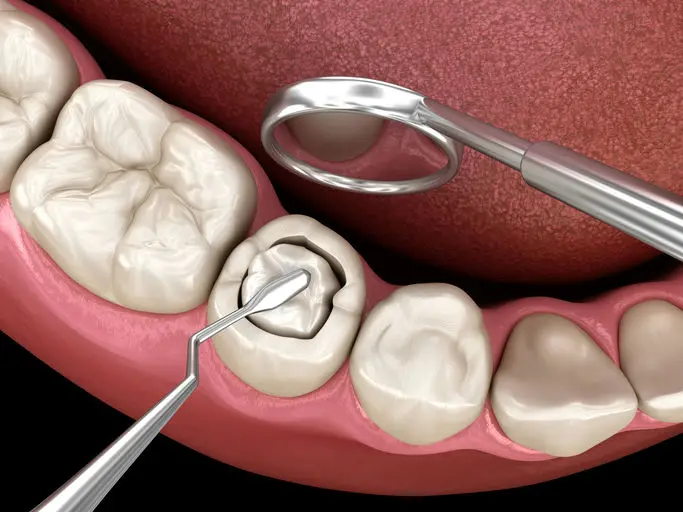
A dental filling repairs a tooth damaged by decay, restoring its shape and function and stopping further deterioration. Here are the common types and what to expect at your visit.
Types of filling
| Type | Looks | Good to know |
|---|---|---|
| Composite (tooth-coloured) | Matches the tooth | Bonds to the tooth; popular for visible teeth |
| Amalgam (silver) | Metallic | Hard-wearing; used on back teeth |
| Ceramic | Tooth-coloured | Stain-resistant and durable |
| Gold | Gold | Long-lasting; less common today |
Your dentist will suggest a material based on the size and position of the cavity, your bite, and your preference.
Why fillings matter
A cavity is a small hole that only gets bigger if left alone, causing pain, infection, or tooth loss. A filling seals the cavity, restores the tooth's strength so you can chew comfortably, and stops bacteria reaching deeper into the tooth.
What to expect at your visit
- Numbing — the area is numbed with local anaesthetic if needed.
- Removing decay — the dentist clears the decayed part of the tooth and cleans the cavity.
- Filling — the material is placed, shaped, and (for composite) set with a curing light.
- Finishing — the filling is trimmed and polished, and your bite is checked. The visit usually takes under an hour.
Mild sensitivity for a day or two afterwards is normal. Cavities are among the most common health conditions worldwide, which is why regular check-ups matter — they catch decay while a simple filling is still all that's needed.
If a tooth is sensitive or you've spotted a hole or dark spot, book a fillings appointment and we'll restore it before it grows.