
Dental Veneers: Pros, Cons & What to Know
Last reviewed
Discover how veneers can transform your smile, the potential downsides, and what to expect before committing to treatment
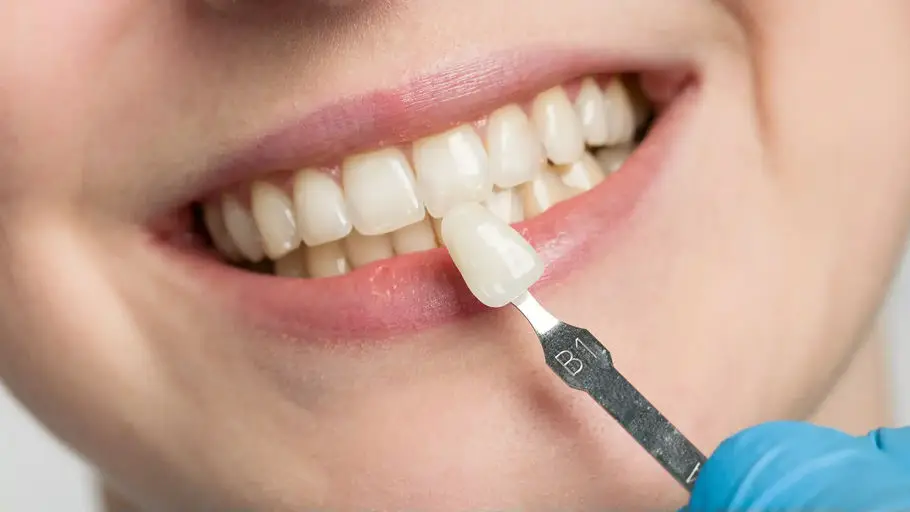
Veneers are one of the most popular dental treatments for improving the appearance of your teeth. Our dentist shares if they are the best solution for you.
Veneers are a popular choice for improving the appearance of your teeth, and it’s easy to see why. They offer a great way to mask dental imperfections such as chips, discolouration, and misalignment, and the results can be stunning.
But before you decide whether veneers are right for you, it is essential to develop an understanding of this dental treatment. Read on to learn about the pros and cons of veneers.
What are Veneers?
Veneers are thin pieces of tooth-coloured material used to improve the appearance of teeth. Veneers are usually applied to the front teeth and are very thin, usually only about 0.4-0.8mm thick. This is about a tenth of the thickness of a real tooth. They are also quite fragile and can easily be chipped or broken if you are not careful with them.
Dental veneers are typically made from porcelain or composite resin. They are designed to be strong and durable and will last many years if properly maintained. Veneers are also very easy to apply, and a dental surgery specialist in Singapore will be able to complete the procedure in about two to three visits.
Pros of Veneers
- They give you a natural-looking smile
Veneers are a great option for people looking to improve the aesthetics of their smile. Porcelain veneers have light-reflecting qualities that mimic the look of tooth enamel, while composite resin offers more malleability when it comes to shaping and forming the veneer so that it matches your other teeth. When done by an experienced cosmetic dentist, both types of veneer can create a flawless smile that looks natural.
- They provide fast results
Veneers offer a quick and efficient solution to your cosmetic dental needs. Unlike other forms of dental restoration, veneers can provide instant results in approximately a few visits.
Porcelain veneers require approximately two to three office visits, while composite resin veneers can be done in only one visit. This makes it possible to get the smile you’ve always wanted without a long wait time.
- They are versatile
If you have a dental imperfection that you want to hide, veneers are a great treatment option. They can cover all kinds of dental imperfections, such as chips, discolouration, misalignment, and gaps between teeth. Veneers are also effective at masking yellow teeth and other stains. Moreover, they do not increase the risk of developing gingivitis (a form of gum disease).[¹]
- They are long-lasting
Veneers are a cosmetic dental solution that can provide long-lasting and aesthetically pleasing results. They also look and feel just like your natural teeth. Porcelain veneers typically last anywhere from 7 to 15 years. However, many patients report experiences of the dental procedure lasting much longer.[²] Your dentist may also suggest replacing it every 15 years to maintain the best possible results.
- They do not require special upkeep
Veneers are a great option for those looking to improve their smile with minimal effort. With veneers, you can achieve a beautiful and natural-looking smile without needing special care. Simply brush and floss twice daily, and see your dentist for regular check-ups to ensure that your veneers remain in good condition. With consistent care, your veneers can last for years, giving you a confident and healthy smile.
Cons of Veneers
- They are permanent
When dental veneers are placed, a thin layer of enamel is removedto make space for the veneer. This is an irreversible process as there is no way to replace the enamel once it has been removed. It is critical to remember that this procedure should only be performed by an experienced dentist who can ensure the veneers fit perfectly without damaging the remaining enamel.
- They have limited effectiveness when restoring severely damaged teeth
Veneers are a popular choice of cosmetic treatment for minor teeth damage, as they provide an effective solution to restore the tooth’s original appearance. However, when there is a large degree of damage to the tooth, veneers may not be sufficient to achieve the desired result.
In these cases, dentists may recommend dental crowns, which cover the entire tooth and provide greater coverage for more severe damages. Dental veneers and crowns are both useful restoration procedures for improving the appearance of teeth. They should be discussed with a certified dental professional to determine which treatment is best for you.
- They may cause tooth sensitivity
Enamel is a protective layer of the teeth, shielding them from extreme temperatures—both hot and cold. If the enamel is removed, the teeth are left vulnerable to temperature changes, making them more sensitive to temperature and pain.
- They may be prone to damage
Veneers are a popular choice among cosmetic dentistry procedures, but it is important to remember that they are very thin and thus prone to damage. Porcelain veneers are at risk of chipping or cracking[³], while composite veneers may crack, chip, or stain over time. Therefore, it is vital for patients to be aware of the risks associated with veneers before opting for this treatment.
- They have a relatively shorter lifespan than other dental treatments
Veneers are a popular dental restoration option due to their cost-effectiveness, ease of application, and aesthetic appeal. However, they have a relatively shorter lifespan compared to other treatments, such as dental crowns.
Alternatives to Veneers
** **
If you are interested in improving the appearance of your teeth, you may also want to consider other dental treatments, such as dental bonding, teeth whitening, and dental crowns.
** **
- Dental bonding
** **
Dental bonding is a simple, cost-effective alternative to more expensive treatments for improving the appearance of teeth. The treatment involves applying a tooth-coloured resin directly to the tooth’s surface to restore minor dental imperfections such as chips, gaps, and discolouration
The procedure requires no anaesthesia or post-procedure recovery time. Depending on the location of the bonded tooth, your bite, and eating habits, the treatment may last between 4 and 8 years.
** **
- Teeth whitening
** **
In-clinic teeth whitening treatment is another popular treatment amongst those looking to improve the appearance of their teeth. Teeth whitening treatment** **can effectively whiten teeth and address discolouration caused by certain foods or habits, such as tobacco use.[⁴]
** ** - Dental crowns
** **
Dental crowns are fixed, custom-made restorations to fit individual patient needs and provide long-lasting protection for weak and broken teeth. Crowns can also cover up dental imperfections, such as gaps and discolouration.
Dental crowns are highly durable and withstand normal wear and tear, making them a great investment that will last for years.
** **
Conclusion
** **
Getting veneers is a big decision, and it’s a decision that you should not take lightly. If you decide that veneers are the right treatment option for you, ensure you are ready to take care of them properly. Remember, veneers are a long-term investment and will last many years if properly maintained.
Visit Advanced Dental for general and specialist dental services in Singapore. Our qualified team of dentists is ready to meet your unique needs—whether it is a routine exam or a wisdom tooth removal using MediSave.
Contact us at 62332199 today to learn more. We will be happy to answer any questions about the various dental treatments available.
¹ https://doi.org/10.1111/j.1365-263X.1991.tb00332.x
² https://doi.org/10.17219/dmp/90729
³ https://doi.org/10.1016/0300-5712(94)90085-x
⁴ https://doi.org/10.1038/sj.bdj.4800959
Image Source: Freepik