
Oral Surgery
Surgical procedures of the mouth and jaw, including surgical extractions, wisdom tooth removal, bone grafts and biopsies, under local anaesthesia, sedation or general anaesthesia.
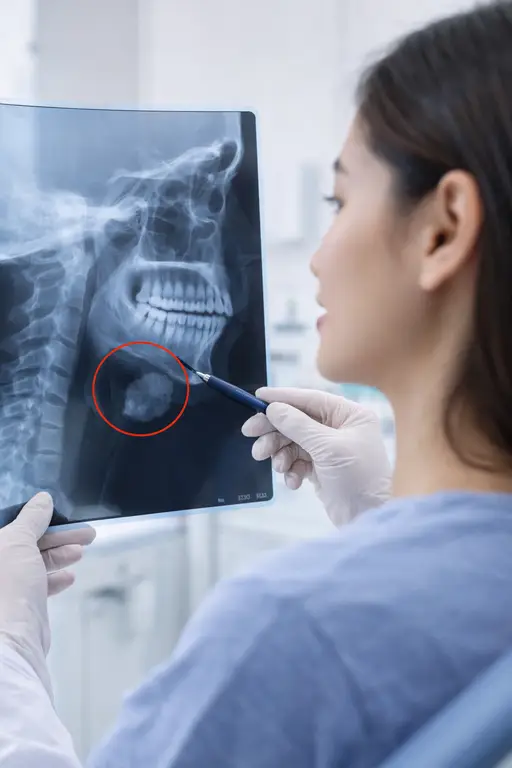
Jaw cysts and tumours are abnormal growths or fluid-filled sacs that develop in the jawbone or surrounding tissues. While many are benign, some may require prompt attention to prevent complications.
Our clinic uses advanced imaging techniques such as X-rays, CT scans, and biopsies to accurately diagnose jaw cysts and tumours.
Our experienced dental surgeons provide personalised care using digital imaging, ensuring safe and effective treatment for jaw cysts and tumours. Your comfort and long-term oral health matter to us.
People found to have a cyst or a benign growth in the jaw — often picked up on a routine X-ray, or causing swelling, discomfort or a displaced tooth. Imaging and, where needed, a biopsy confirm what it is before treatment is planned.
Usually a single surgical appointment under local anaesthesia or sedation, with the length depending on the size and position. A follow-up checks healing and reviews any laboratory results.
Some swelling and discomfort for a few days, eased with prescribed pain relief, soft foods and cold packs. Larger procedures take longer to settle; the surgeon advises on aftercare for your case.
As with any oral surgery there is a small chance of infection, bleeding or swelling, and — depending on the site — temporary altered sensation near a nerve. Some cysts can recur, so follow-up is advised.
Untreated jaw cysts can lead to bone erosion, tooth displacement, and, the development of infections. Early intervention helps prevent these complications.
Recurrence is possible, especially in individuals prone to forming saliva stones. Maintaining good oral hygiene, staying hydrated, and massaging the salivary glands can help prevent recurrence.
With the administration of local anesthesia, there is no pain during the procedure.
Recovery times vary, but most patients can resume normal activities within a few days after mucocele removal. Postoperative care instructions are provided to facilitate healing.
Saliva stones form when minerals in saliva accumulate and crystallize within the salivary ducts, blocking the normal flow of saliva.
Histology reports are prepared by pathologists who specialize in analysing tissues. These specialists examine the tissue samples under a microscope and provide detailed information about the cellular characteristics.
Yes, patients will be given a copy of their histology report.
Symptoms may include pain or swelling in the mouth, difficulty swallowing, dry mouth, pus discharge and intermittent or reduced saliva flow.
Dentists can diagnose mucoceles through a clinical examination.
Recovery times vary, but patients can usually resume normal activities within a few days to weeks after surgery. Postoperative care instructions are provided to promote healing.
Yes, removal is necessary to alleviate symptoms and prevent complications such as infection.
Procedures such as biopsies for suspicious lesions, excision of cysts, tumors, or removal of abnormal tissues may require a histology report for accurate diagnosis and treatment planning.
Dentists diagnose jaw cysts through a combination of clinical examinations, dental imaging such as X-rays or CT scans, and, if necessary, biopsy to confirm the nature of the cyst.
Yes, mucoceles can occur in individuals of all ages, including children.
Depending on the cause of the jaw cysts, treatment options may include cyst removal through surgery, extraction and/or root canal treatment. The choice of treatment depends on the type and size of the cyst and the impact on surrounding structures.
A jaw cyst is a fluid-filled sac that may develop within the jawbone. Cysts can vary in size and may be discovered during routine dental examinations or when investigating symptoms.
Symptoms may include swelling, pain, changes in bite, tooth displacement, presence of a palpable mass and numbness of the mouth. However, some cysts may be asymptomatic and discovered incidentally through X-rays.
While rare, there is a risk of infection. Dentists take precautions, and patients are typically provided with post-removal care instructions to minimise the risk of infection.
The information from a histology report plays a crucial role in determining the most appropriate and effective treatment for the patient, ensuring targeted care based on the specific diagnosis.
Jaw cysts may arise from developmental issues, infections, or the presence of impacted teeth. They are typically non-cancerous but can cause severe complications if left untreated.
With the administration of local anesthesia, there is no pain during a mucocele removal procedure. Some discomfort may be experienced during the recovery period.
A histology report is a document generated by a pathologist that provides a detailed microscopic examination and analysis of tissue samples obtained during a dental procedure. It helps in diagnosing various oral conditions, lesions, or abnormalities.
Mucoceles are typically painless but some can cause discomfort, especially if they are frequently traumatized by the teeth or if they become large.
All jaw cysts require treatment. The treatment depends on the size, type, and symptoms associated with the cyst.
Mucoceles form when the salivary gland ducts become blocked or injured, leading to the accumulation of saliva and the formation of a cyst.
Dentists diagnose saliva stones through a combination of clinical examination, patient history, and imaging techniques such as X-rays or CT scans to visualize the obstruction.
The turnaround time for histology reports can vary, but it typically takes a few days to a couple of weeks. It depends on the complexity of the analysis
A mucocele is a benign, fluid-filled cyst that commonly forms on the inner lips, floor of the mouth, or tongue. It results from the blockage of salivary gland ducts and an accumulation of saliva.
Yes, untreated saliva stones can lead to salivary gland infections, abscess formation, and chronic inflammation. Prompt removal is essential to prevent these complications.
Prevention is challenging, as some cysts may develop due to developmental factors or unknown causes. Regular dental check-ups and early intervention for dental issues may contribute to early detection and management.
A saliva stone, or sialolith, is a calcified mass that forms within the salivary glands, obstructing the flow of saliva and leading to swelling, pain, and potential infection.
Surgical procedures of the mouth and jaw, including surgical extractions, wisdom tooth removal, bone grafts and biopsies, under local anaesthesia, sedation or general anaesthesia.
Discover the advanced surgical care OMS specialists provide for your teeth, jaws, face, and overall oral health