Wisdom Teeth: Care, Pain & When to Remove

Last reviewed
Understand wisdom tooth symptoms, treatment options, and the right time for removal
Wisdom teeth (third molars) usually appear between 17 and 25. When they come in straight and clean, they can be looked after like any other tooth — but their position and late arrival often make them harder to care for. Here's how to keep them healthy and when to act.
Why wisdom teeth need attention
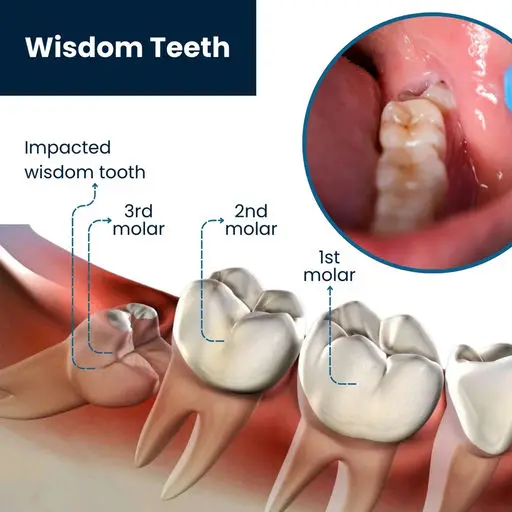
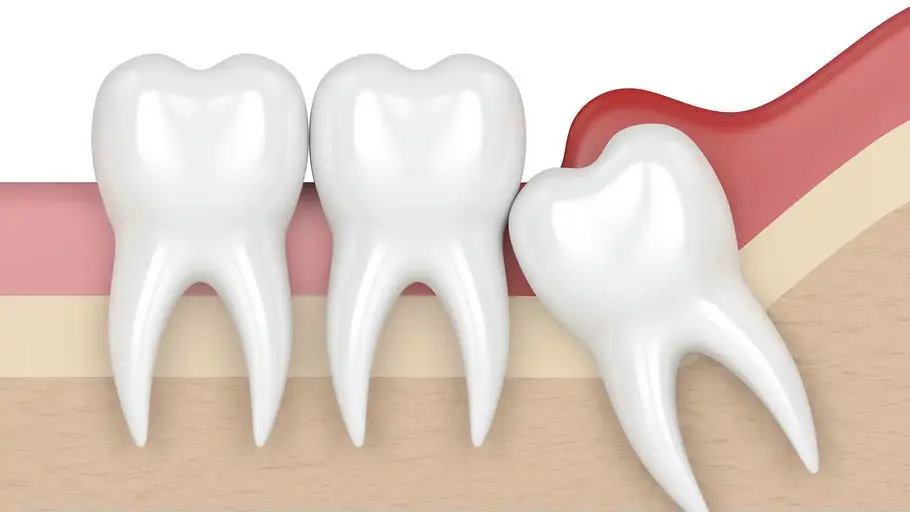
There's often not enough room at the back of the jaw, so wisdom teeth can erupt at an angle or only partly. That can lead to:
- Impaction — a tooth stuck under the gum or against its neighbour, causing pain and swelling.
- Crowding — pressure on the teeth in front.
- Infection — partly erupted teeth create pockets where bacteria collect, raising the risk of gum disease and decay.
How to care for your wisdom teeth
- Keep up regular check-ups. Your dentist can monitor how the teeth are coming in, and an X-ray catches problems early.
- Clean thoroughly. Brush twice a day with fluoride toothpaste and floss daily, reaching right to the back.
- Pay extra attention at the back. Use a soft brush in gentle circular motions around the gumline; an antimicrobial mouthwash helps reduce bacteria around a partly erupted tooth.
- Watch for warning signs. Pain, swelling, redness, a bad taste, or difficulty opening your mouth all warrant a check.
Managing pain
Mild soreness as a wisdom tooth erupts can be eased with a warm salt-water rinse and simple over-the-counter pain relief. Persistent or worsening pain, swelling, or a gum flap that keeps flaring up should be seen promptly rather than left.
When removal is the answer
If a wisdom tooth keeps causing problems or threatens the teeth around it, your dentist may recommend removal. For how that decision is made, MediSave coverage, and what surgery involves, see wisdom teeth: when to remove them.
If a wisdom tooth is sore or trapping food, book a wisdom tooth assessment before it flares up.