
Emergency Dentistry
Same-day dental care for urgent problems — toothache, a broken or knocked-out tooth, swelling, or a lost filling or crown. Book an urgent slot by region, or call, and we will see you at the nearest available clinic.
Dental and facial trauma covers injuries to the teeth, gums, lips, jaws and facial bones — most often from falls, sports, road accidents or a knock to the face. Prompt assessment matters: for a knocked-out adult tooth in particular, the chance of saving it falls quickly with time.
See a dentist as soon as possible for a knocked-out, broken, loosened or pushed-out-of-place tooth, a cut to the lip or gum that won't stop bleeding, or pain and swelling after a knock. Go straight to a hospital emergency department for a suspected jaw fracture, heavy bleeding that won't settle, difficulty breathing or swallowing, or a head injury with drowsiness or vomiting.
The dentist checks the teeth, bite and surrounding tissues and usually takes an X-ray (sometimes a 3D scan) to look for fractures of the tooth, root or jaw. Treatment depends on the injury — repositioning and splinting a displaced tooth, a filling or crown for a chip, root canal treatment for an exposed nerve, or stitches for a soft-tissue cut. A tooth that survives an injury is reviewed over the following months, as some effects appear later.
General dentists handle most dental injuries. Jaw and facial-bone fractures, and complex injuries, are managed by an oral and maxillofacial surgeon, and referred to a hospital where needed.
Bring any tooth fragments, and let us know how and when the injury happened.
Anyone who has injured teeth, jaws or face — a knocked-out, broken or displaced tooth, or a cut or fracture from a fall, sport or accident. Prompt assessment matters, especially for a knocked-out tooth, where time affects the chance of saving it.
Emergency care is given as soon as possible; follow-up depends on the injury — from a single splinting visit to staged treatment and surgical repair over weeks.
Varies with the injury. The team gives specific aftercare; an injured tooth is reviewed over the following weeks and months, as some effects appear later.
An injured tooth can later darken, lose vitality and need root canal treatment, or in some cases be lost. Follow-up reviews catch these so they can be managed early.
Yes, dentists follow established guidelines for the management of acute dental trauma, including assessing the extent of the injury, providing pain management, and initiating appropriate interventions such as splinting or repositioning teeth.
Patients should rinse their mouth gently with water, avoid touching the injured area, and preserve any avulsed teeth in milk or a saline solution. Seeking immediate dental care is crucial for the best outcomes.
Yes, local anaesthesia is often administered to numb the affected area before suturing, ensuring the patient's comfort during the procedure.
Dentists may use radiographic imaging, such as X-rays, to assess the extent of dental trauma and plan appropriate interventions. This helps in identifying fractures, dislocations, or other internal injuries.
Yes, severe dental trauma may result in both facial scarring and dental issues. Dentists and oral surgeons work collaboratively to address both aspects of the injury for comprehensive patient care.
Yes, patients will typically have scheduled follow-up appointments to monitor the healing of both facial lacerations and dental injuries. Additional treatment may be necessary based on the progress.
The healing time varies depending on the location and extent of the laceration. Your dentist will provide post-procedural care instructions to promote proper healing.
Potential risks include infection, scarring, or issues related to wound healing. Your dentist will discuss these considerations before the procedure.
Management involves a combination of proper wound care, scar-reducing creams or gels.
Suturing should be performed as soon as possible after the injury, typically within a few hours.
Suturing may be required after facial injuries or accidents that result in lacerations on the face or within the oral cavity.
Same-day dental care for urgent problems — toothache, a broken or knocked-out tooth, swelling, or a lost filling or crown. Book an urgent slot by region, or call, and we will see you at the nearest available clinic.
Surgical procedures of the mouth and jaw, including surgical extractions, wisdom tooth removal, bone grafts and biopsies, under local anaesthesia, sedation or general anaesthesia.
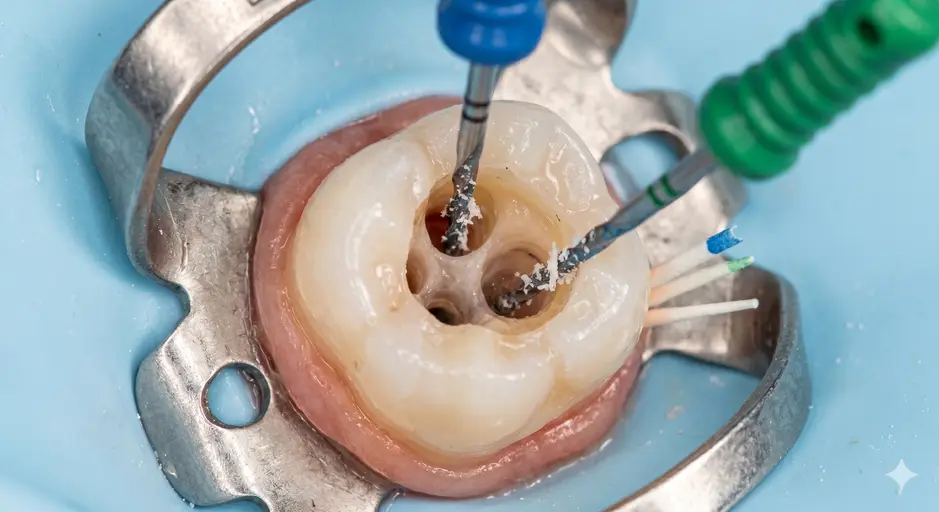
Removes infected or inflamed pulp from inside a tooth, then cleans, shapes and seals the root canals so the natural tooth can be kept. Usually one to three visits; a crown is often recommended afterwards.
Fast, reliable care for toothaches, broken teeth, and other urgent dental problems in Singapore
Discover the advanced surgical care OMS specialists provide for your teeth, jaws, face, and overall oral health